One Batch, 21 Days: From Brew Day to Tap Handle in a Brewpub
Follow a single batch of pale ale through a 7 barrel brewpub, from mash in to the first pour three weeks later, with the decisions, the records and the tank time each stage actually takes.
Day Zero: Grain Bill, Mash Schedule and Brewhouse Efficiency
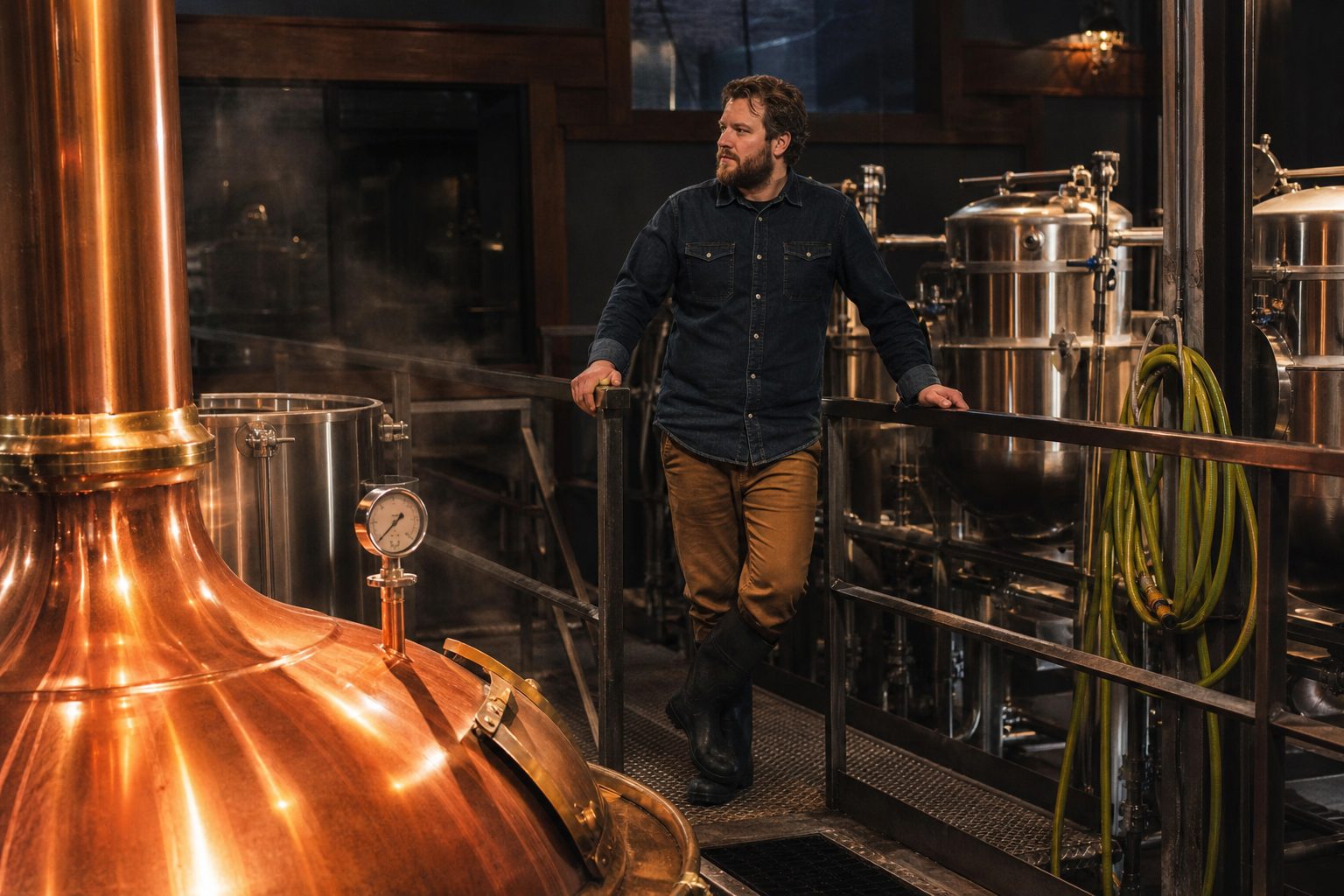
Every batch starts on paper. For a 7 barrel brewpub, the pale ale recipe gets scaled to match projected sales and tank space. The head brewer sits down with the grain supplier's list, selecting American two-row malt as the base, then adding specialty malts for color and body. Most pale ales run with a simple bill: about 90 percent base malt and the rest split between crystal and a touch of wheat. This batch will use local grains where possible, keeping cost and flavor in balance.
Water chemistry comes next. The brewer checks the municipal supply's mineral content and calculates adjustments. Calcium sulfate is weighed out for snap, while a pinch of calcium chloride rounds the palate. The water is measured in barrels, accounting for losses in the mash tun and lauter grant.
The mash schedule is set: one hour at 152 degrees Fahrenheit to favor fermentable sugars, with a mash-out at 168 degrees to thin the wort. The team double-checks the mill gap and the lauter flow, since a stuck sparge can throw off the whole day. On this brew day, everything runs to target, and they hit 75 percent brewhouse efficiency, putting just over seven barrels of wort in the kettle.
Keep reading: Non Alcoholic Beer, Cider and Guest Taps: Where Tap Walls Are Headed
Days 1 to 5: Primary Fermentation and Daily Gravity Checks
The wort is chilled through the heat exchanger and oxygenated before pitching a healthy slurry of ale yeast. The tank lid is clamped down and a blowoff set in place. On day one, the yeast is active within hours, forming a thick krausen. Fermentation temperature is set at 68 degrees to keep esters in check and allow for clean attenuation.
Each morning, cellar staff pull samples with a sanitized thief. They check gravity with a hydrometer, record temperature, and note any off-aromas. Early in primary, the drop from 1.054 to around 1.030 signals strong activity. Temp is nudged up a degree on day three to keep yeast moving. By day five, gravity nears terminal, often around 1.012 for a standard pale ale.
Oxygen exposure is avoided at every step. Sampling ports are purged, and staff record each reading in a paper log or, in some shops, a digital brew log. This data matters: if gravity stalls or off-flavors creep in, the team must decide whether to wait, warm the tank, or even repitch.
Days 5 to 8: Dry Hop Timing and Contact Window
With primary fermentation winding down, the debate over dry hopping begins. The brewer checks the yeast's activity. If the batch is still fermenting slowly, hops go in as biotransformation can boost aroma. If gravity is stable, hops are added for a classic dry hop.
A hatch is cracked, and 10 to 12 pounds of whole-cone and pellet hops are bagged and hung in the tank or, more commonly, dumped in loose for maximum contact. Citra and Cascade are chosen for this batch. Oxygen is again the enemy: hops are added quickly, and the tank is resealed and purged with CO2.
The contact window is three days, with a gentle recirculation for the first 24 hours. Longer contact can mean grassy notes, so on day eight, the hops are removed or allowed to settle. The team pulls a sample, checks for haze, and logs the hop aroma.
Keep reading: The Taproom Open and Close Checklist for Draft, Glass and Gas
Days 8 to 12: Diacetyl Rest, Crash and Yeast Harvest
After dry hopping, the brewer tastes for diacetyl, the buttery off-flavor that can linger if yeast is too cold or rushed. A forced diacetyl test with a hot water bath confirms if the batch is clean. If any hint remains, the tank stays at 70 degrees for another day or two.
Once cleared, the cooling jacket is set to drop the beer to 33 degrees. This "cold crash" helps yeast and hop debris settle. The first day of crash is also the window for yeast harvest. The bottom valve is opened, and a few gallons of thick slurry are collected for the next batch. Many brewpubs re-pitch yeast five to ten times before starting fresh. Every harvest is logged: strain, generation, and collection date.
Spent hops and trub are dumped, and the tank is gently purged with CO2. Staff record how much yeast was collected, how much beer remains, and note any issues. By day 12, the beer is clear, crisp, and ready for finishing.
Days 12 to 16: Carbonation, Fining and Dissolved Oxygen Control
The crash is complete. The beer is transferred, or "racked," to a brite tank for carbonation. Some brewpubs carbonate in the fermenter, but most prefer the control of the brite. CO2 is bubbled in through a stone at 12 to 14 psi. The team checks volumes of CO2 daily, aiming for 2.4 to 2.6 for a classic pale ale mouthfeel.
If the batch shows haze, finings are added. Isinglass or silica gel are common, mixed gently to avoid stripping hop aroma. The beer is sampled after 48 hours; clarity is checked against a control glass under bright light.
Throughout this stage, dissolved oxygen is a constant worry. Every hose and fitting is purged, and the tank is sealed tightly between samples. Many shops use a low-range dissolved oxygen meter, but some rely on best practices and careful handling. Even a small mistake here can shorten shelf life and dull hop character.
See how TapListLive handles this for craft brewing
Days 16 to 19: Kegging, Purging and Cellar Records
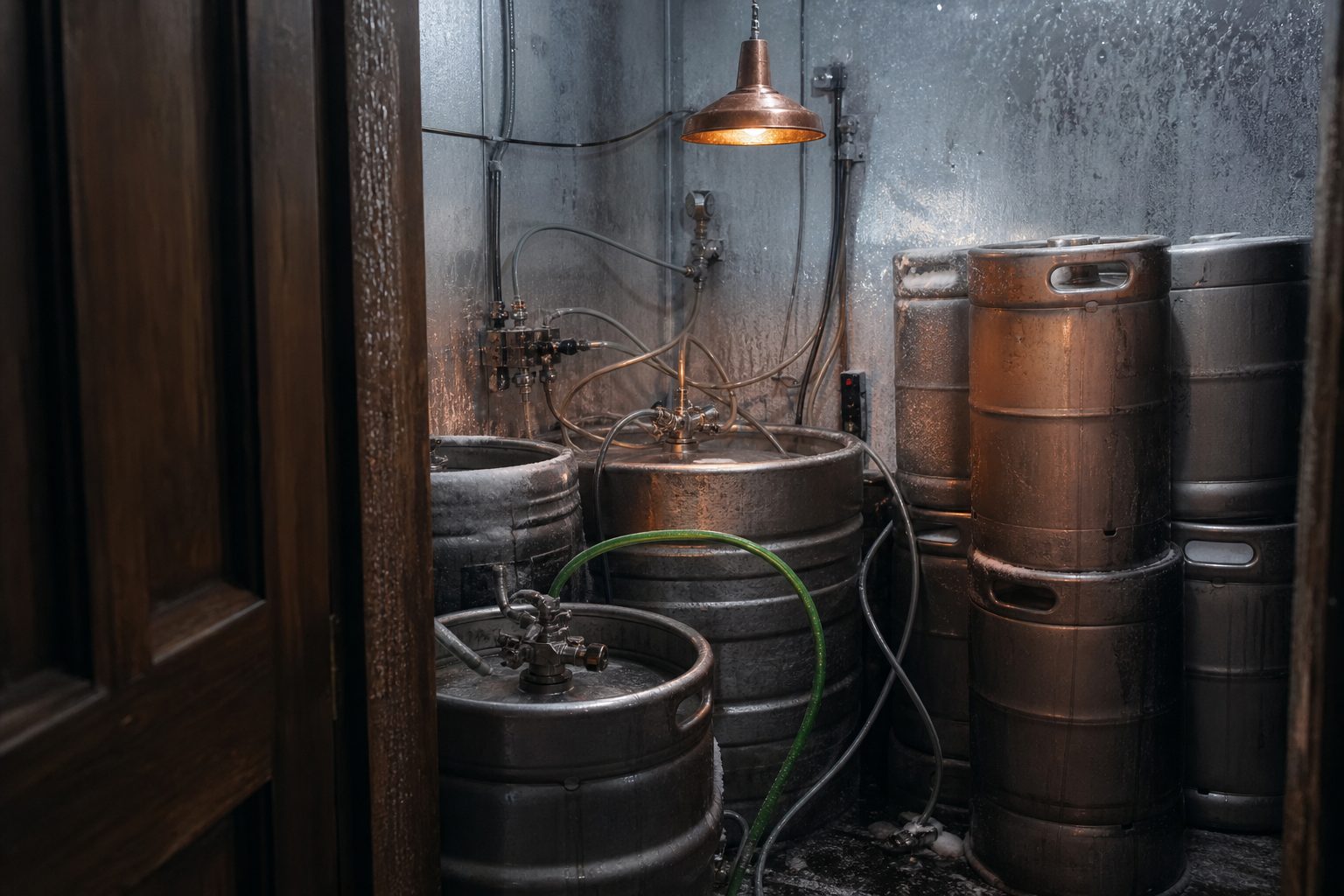
As carbonation stabilizes, the team schedules kegging. Clean, sanitized kegs are purged with CO2, then filled off the brite. Each keg is weighed, tagged with batch and fill date, and noted in the cellar log. For a 7 barrel system, about 14 half-barrel kegs are filled, with a few sixtels set aside for the taproom or events.
Some beer is transferred to a serving tank if the brewpub uses direct-draw lines. Each transfer is logged: how many gallons, what time, and who handled the fill. The tank and lines are checked for leaks and CO2 pressure is set to match the serving system.
Cellar staff update inventory and note how much beer remains for staff training and shift planning. Any leftover yeast or trub is dumped and the tank is rinsed in place. The batch is now ready for tapping.
Day 20: Tapping, Line Balance and the First Pour
One day before release, the taproom manager lines up a staff tasting. Kegs are rolled to the cold room and allowed to settle overnight. On the morning of the release, a line cleaning is done to ensure no old beer or sanitizer lingers. Draft lines are balanced based on keg pressure, run length, and faucet type. For this pale ale, the team sets about 12 psi and checks flow rate at the faucet.
The first pour is judged for clarity, foam, and aroma. If the pour is too slow or foamy, the team checks for temperature swings or a kinked line. When everything is right, the tap handle is fitted and the first pints go to staff, then regulars. The batch's release is logged, and the taproom's digital and printed menus are updated.
Customer feedback is immediate. Staff note if the beer tastes consistent from keg to keg, and if any issues arise, the cellar notes help trace the problem. Within hours, the new pale ale is on every taproom screen, in the QR menu, and on the website.
What the Batch Cost in Ingredients, Labor and Tank Time
Tracking the true cost of a batch goes beyond just grain and hops. For seven barrels, the grain bill for a pale ale runs several hundred dollars, with hops adding another substantial portion. Yeast is either repitched or purchased fresh, with each pitch logged for traceability. Water and utilities, heating, chilling, and cleaning, factor into the total, though few shops track these costs down to the penny per batch.
Labor is a major piece. Brew day often takes two people eight hours from mash-in to knock out, then another hour for cleanup. Fermentation and cellar work add a few hours every day: gravity checks, dry hopping, yeast harvest, and crash. Kegging and line cleaning round out the list. Over the three weeks, staff may log nearly forty hours on a single batch, not including taproom time spent training staff and launching the beer.
Tank time is the other constraint. A seven barrel fermenter is tied up for nearly three weeks. This means fewer turns per month and a need to plan releases so that no tank sits empty. If a batch lags, it can throw off the whole taproom's schedule. Many operators keep a whiteboard or spreadsheet to track every vessel by batch, date, and status.
Finally, the cost of keeping customers informed is often overlooked. Updating tap lists, menus, and digital displays takes time, especially when staff are stretched. A live tap list management tool can remove this friction, letting brewers and managers focus on the beer instead of the paperwork.