Chalk that nobody has time to redo
A guest reads the wall, orders the stout that blew at six, and the beertender has to walk it back at the register. Most rooms comp the difference to keep the table happy.
About $1,600 a year in comped poursTapListLive is the tap list your bar team actually keeps current, because the whole change takes eight seconds on a phone at the cooler door. One tap swap writes to the taproom screens, the beer page on your website and the QR menu on every table at the same moment.
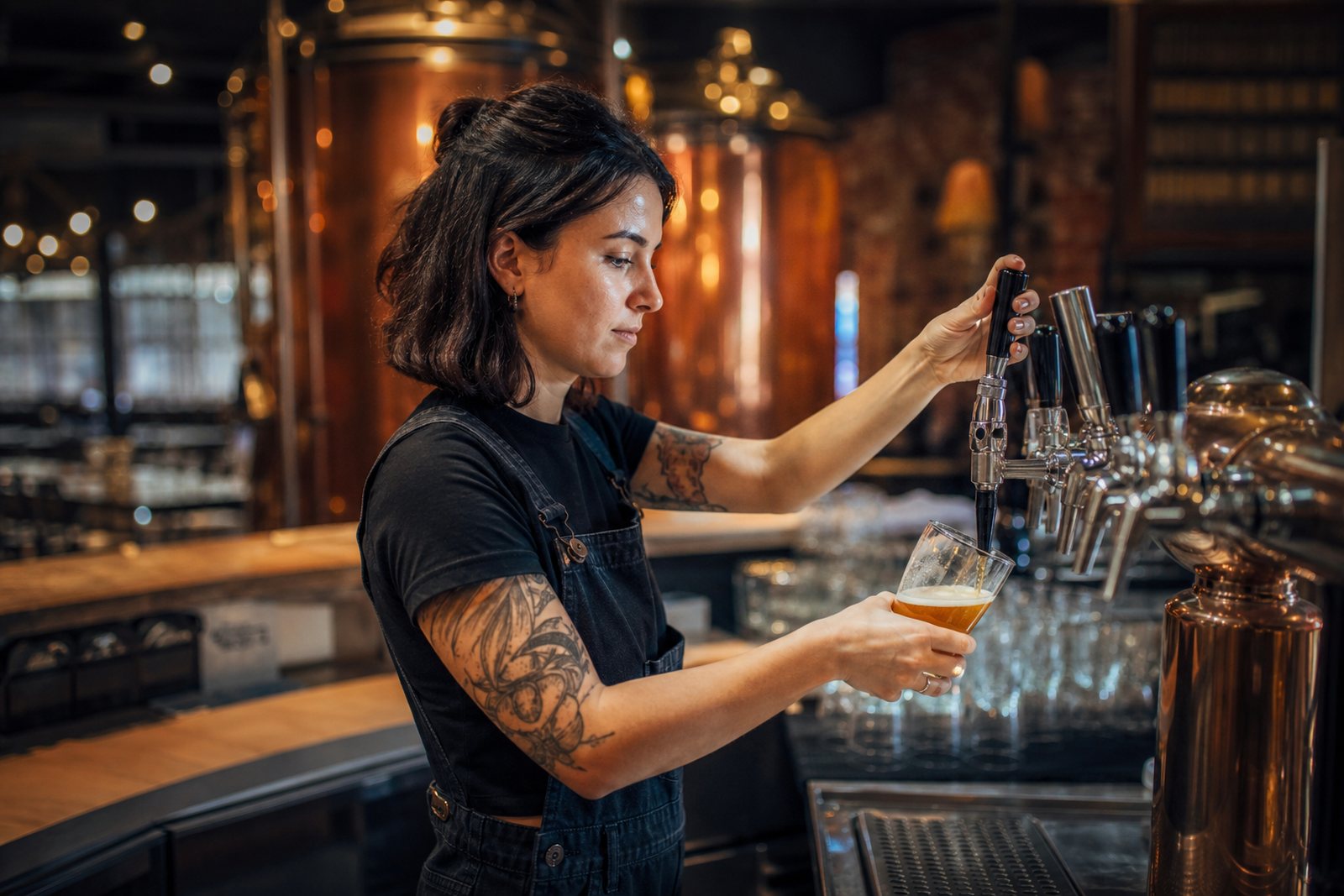
Every taproom runs the same loop. A keg kicks in the middle of a rush, somebody says they will fix the board after close, and the correction lands two days later on a chalk wall, never on the website, and never on the QR menu that a table is reading right now.
A guest reads the wall, orders the stout that blew at six, and the beertender has to walk it back at the register. Most rooms comp the difference to keep the table happy.
About $1,600 a year in comped poursYour website still lists the winter porter in August because updating it means opening the site builder, resizing an image and republishing. Nobody wants that job at 11 pm.
6 hours a week of manual editsTable tents get reprinted every time three taps rotate, and the old codes stay on half the tables anyway. The print shop invoice is the smallest part of the cost.
$420 a year in reprints and table tentsWhen the wall cannot be trusted, every table asks what is actually pouring. That is forty seconds of talk before the first order, times two hundred covers.
40 seconds lost at every tableTapListLive was built around the one minute when a keg is being changed, because that is the only minute anyone has. Everything else happens on its own.
Enter your taps in the order they hang, from tap 1 to tap 60, with keg size, glassware, pour sizes and price per pour. We do this with you on a call, so the first board matches the wall you already have.
When a keg blows, the beertender opens TapListLive on the bar phone, taps the line number, picks the next beer from your cellar list and holds to confirm. Eight seconds, one hand, no laptop, no login walk to the office.
The taproom screens, the beer list embedded on your website and the QR menu at the tables all pull the same record, so they cannot drift apart. Boards refresh in place with no flash and no reload.
Every change writes a line to the log, so you can see which lines turned over, how many days each keg lasted and what kicked before the weekend. Send it to the brewer before the next brew day is scheduled.
No new hardware. If a screen can open a browser, it can run a TapListLive board, and most rooms start with the streaming stick already behind the television.
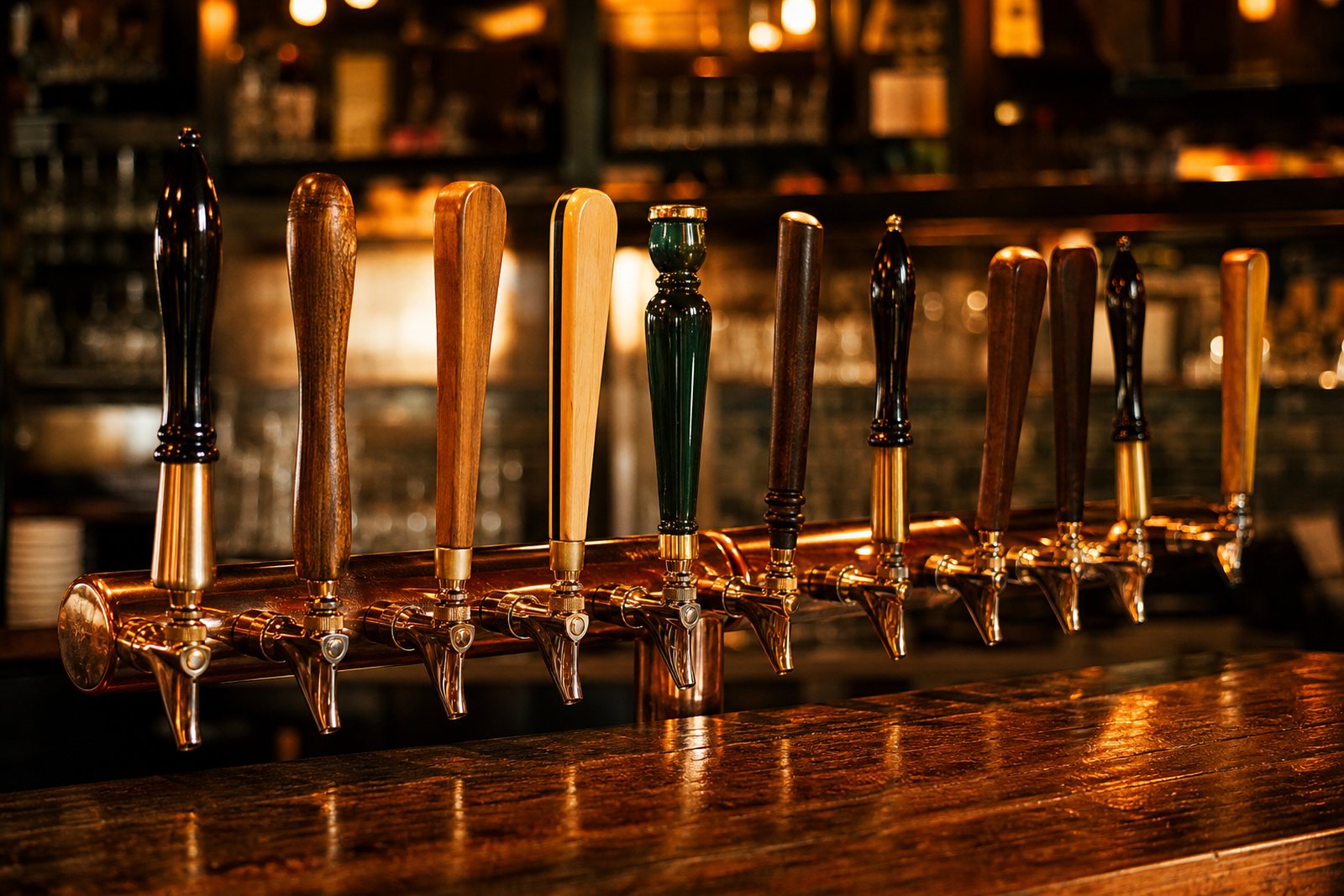
Six parts, all of them written after standing behind a bar during a rotation. Nothing here asks a beertender to type on a laptop.
Your taps appear in hanging order with keg size, batch number, glassware and price per pour size, exactly as your staff read them. Drag a line to reorder the wall when you move the guest cider to the end.
Pick a layout for one, two or three columns, set the type size for the depth of your room, and the board rotates guest taps and small format bottles between full lists. Prices, ABV and remaining ounces can all be toggled per screen.
Paste one line into your site and the beer list renders with your own typeface, colors and heading sizes, on Squarespace, WordPress, Wix or a hand built page. Search engines see real text, not an image of a chalkboard.
Print the table codes once and never again, because the code points at a page that redraws itself the second a line changes. Guests get pour sizes, prices, allergen notes and a plain language description without downloading anything.
Count pours at the register or enter a quick reading at shift change, and TapListLive tracks ounces left on every line. The bar phone buzzes at your chosen threshold, so the next keg is staged before the last pint goes out.
Keep every beer you have ever brewed with style, ABV, IBU, malt and hop notes, glassware and pour prices, then bring one back to a line in two taps. Batch numbers stay attached, so the pour report tells the brewer which batch actually moved.
These come from the 312 US rooms running TapListLive, measured against what they told us at signup. Averages, not best cases.
Re-chalking the wall, editing the website beer page and reprinting table tents used to eat most of a shift. All three now happen as a side effect of the keg change itself.
When the board matches the cooler, guests stop ordering beer that blew an hour ago. Rooms with 20 or more taps report the biggest drop, because their rotation is fastest.
A beer list that is accurate every day gets shared, bookmarked and indexed. Regulars start checking the page before they drive over, and the page becomes the second most visited on most brewery sites.
Measured from the confirm tap on the bar phone to the slowest board in the room finishing its repaint. Screens hold the last good list if the internet drops, then catch up on their own.
We asked them what actually changed on the floor, and left the answers the way they said them.
We turn eleven of our twenty four lines in a normal week. The wall used to be a suggestion, and my openers spent the first hour with a rag and a chalk pen before anybody walked in. Now the closing beertender changes the line at the cooler and I stop carrying it around in my head.
I signed up for the screens and stayed for the website embed. Our beer page had been nine months out of date because I was the only person with the login. Last quarter it pulled more traffic than our events page, and I have not opened the site builder since February.
The pour report is the part I did not expect. We could see the pale kicking in four days while the saison sat for three weeks, so we moved the saison to a smaller line and put a rotating guest tap in its place. That is a brewing decision that came out of a tap list tool.
One flat monthly rate per brewery. Guest taps, cider, wine and non alcoholic lines all count the same as beer, and traffic to your QR menu is never metered.
$29 per month
Up to 16 taps, 2 screens
$69 per month
Up to 40 taps, 6 screens
$139 per month
Unlimited taps, up to 6 rooms
Every plan is billed monthly in US dollars and can be cancelled at any time from the account screen. There is no setup fee, no per screen charge and no annual contract to sign.
If yours is not here, put it in the form at the bottom and you will get a written answer, not a sales call.
Plans are $29, $69 and $139 per month in US dollars, billed monthly with no annual contract. A tap is any line hanging on your wall, so beer, cider, wine, cold brew and non alcoholic lines all count the same. Bottles and cans listed on the same board are free and never count against the tap limit. If a seasonal wall pushes you past a limit, we tell you first and let you decide.
Most rooms are live the same afternoon they call. The setup session runs about thirty minutes, and we build the wall with you while somebody reads the handles out loud from tap 1 down. After that, each television needs a browser pointed at one address, which takes roughly three minutes per screen. Nothing gets installed on the bar phones, so there is no app store approval to wait for.
You own every record in the account. TapListLive stores your beer library, tap history and pour counts on servers located in the United States, and we do not sell, rent or share them with anyone. You can export the full cellar list and the pour log as CSV whenever you want, straight from the account screen. If you close the account we delete the operational records within thirty days and keep only the invoice history the law requires us to hold.
The website embed drops into Squarespace, WordPress, Wix, Shopify and hand built pages with a single line of markup. For the register, we import a product list by CSV so the beer names on the board match what the receipt prints, and we can publish your current list to Untappd for Business on a schedule you set. The Multi Location plan adds a read only JSON feed for digital signage or your own app. If your stack is unusual, describe it in the form and we will tell you plainly whether it fits.
You cancel from the account screen and the plan simply stops at the end of the month you already paid for. There is no cancellation fee, no notice period and no phone call to sit through. Your boards keep showing the last published list until that period ends. We hold your cellar library for ninety days in case you come back in the spring, and you can export everything before you leave.
That was the entire design brief. The change screen is one column of tap numbers sized to hit with a wet hand, and confirming a swap is a press and hold so nothing moves by accident in an apron pocket. Devices stay signed in to the room rather than to a person, so there is no password to type at the start of a shift. Rooms that came off a chalkboard tell us the update now happens while the keg is being changed, which is the only time it was ever going to happen.
The Tap Wall is where we publish what the ride alongs turned up. Nine pieces so far on line cleaning, keg yield, TTB filings and the nights when every menu in the room has to agree.
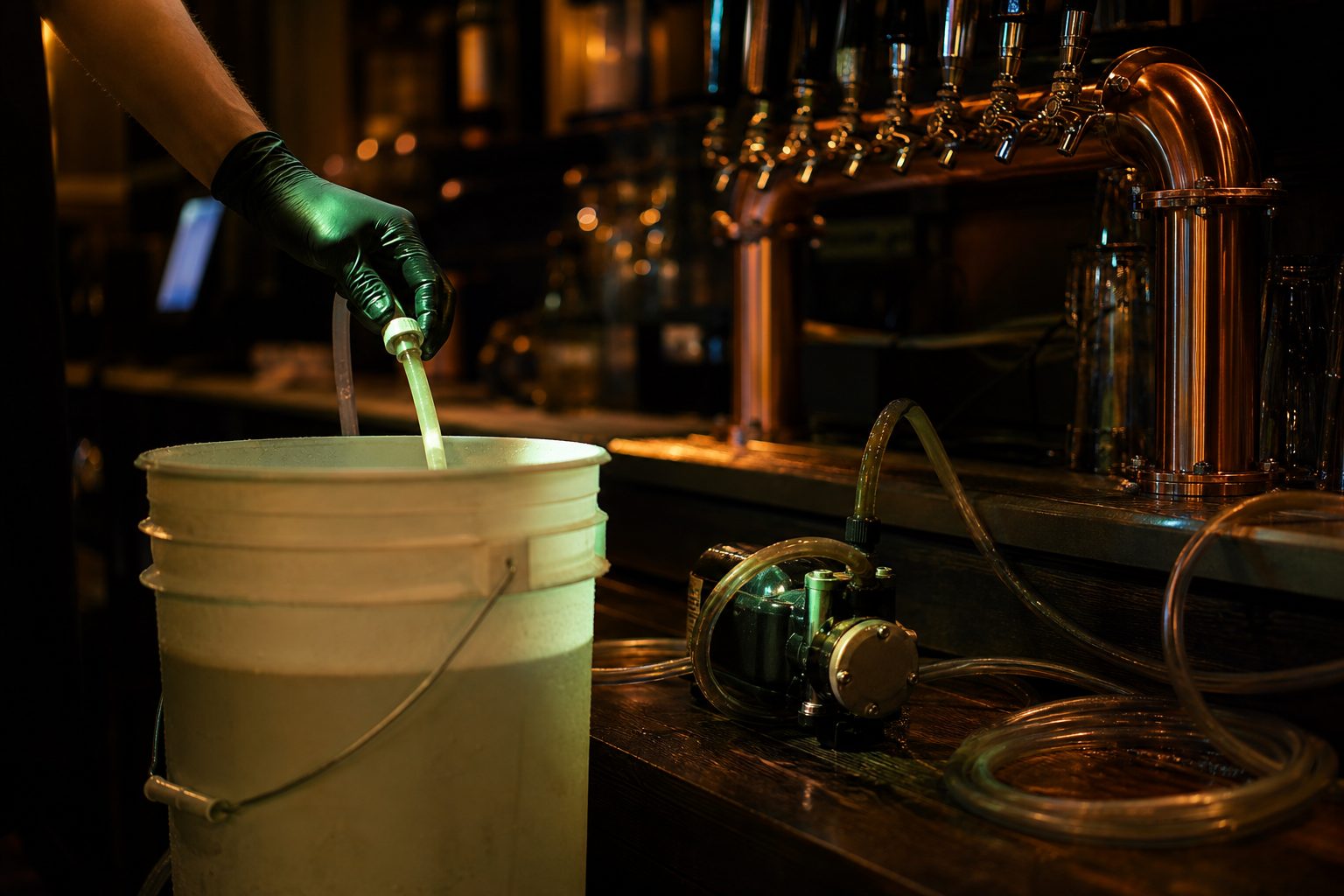 practical guide
Caustic every two weeks, acid a few times a year, and a full faucet teardown in between. Here is the schedule, the chemistry, the labor and the log a taproom needs to keep every line pouring clean.
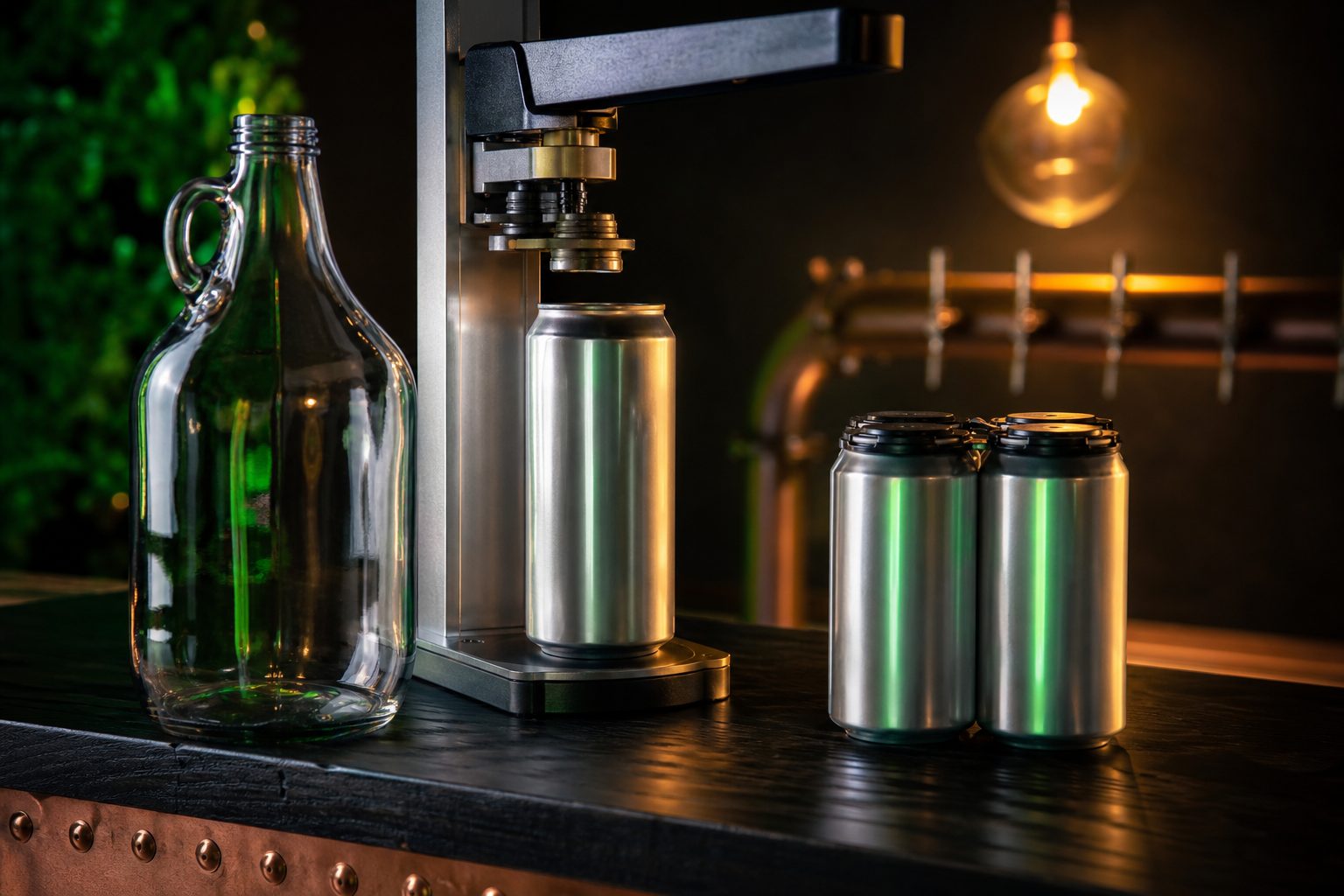 comparison
Three ways to sell beer to go, with different fill costs, different shelf lives and different state rules. Compare margin per ounce, oxygen pickup, equipment and labor before you settle on a mix.
 mistakes to avoid
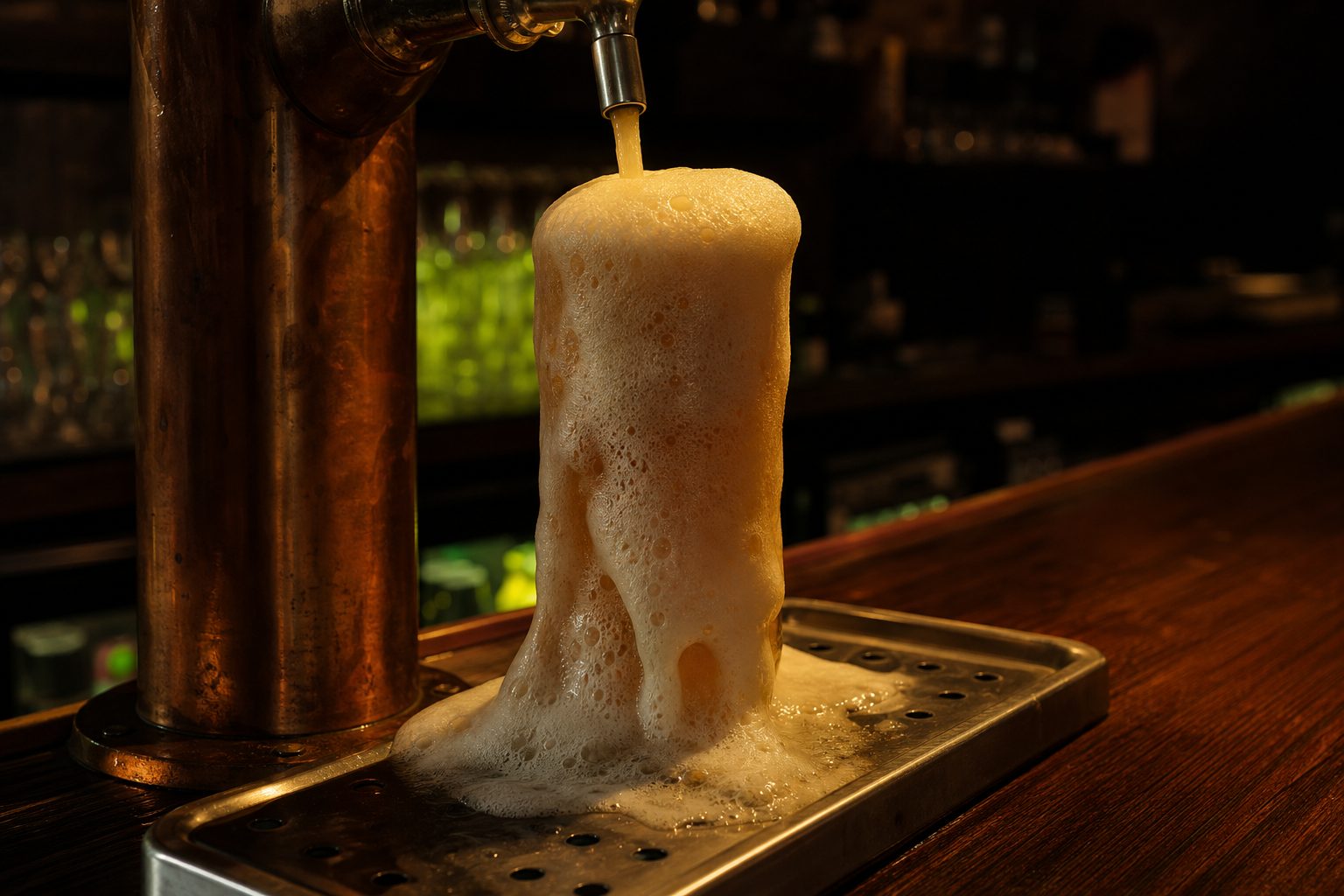
Foam is a symptom, not a cause. Six setup and maintenance errors explain most of it, from applied pressure and line resistance to cooler drift, and each one has a test you can run inside one shift.
New field notes go up as rooms let us behind the bar.
Send the shape of your room and we will come back with a board built for it: your tap count, your screen sizes, your pour prices already entered. No slide deck, no discovery call about your journey, just the wall you actually run.
Answered by a person, not a botOne reply, from a person who has worked a bar. Prefer email? Write to jimenezjulien42@gmail.com and mention your tap count.