How to Run a Two Week Draft Line Cleaning Cycle in a Taproom
Caustic every two weeks, acid a few times a year, and a full faucet teardown in between. Here is the schedule, the chemistry, the labor and the log a taproom needs to keep every line pouring clean.
Why Beer Lines Grow Biofilm and Beer Stone
Every draft system faces the same hidden enemies: biofilm and beer stone. These problems start small, but left unchecked, they affect beer flavor, foam, and customer safety. Biofilm is a slimy matrix of bacteria and yeast that clings to the inside of beer lines. Even new lines can develop biofilm in a matter of days if the system is not cleaned regularly. This sticky layer protects microorganisms from cleaning chemicals and can lead to off-flavors or contamination.
Beer stone is a different beast. It forms when minerals from the water and proteins from the beer combine, creating a hard, gritty buildup. This scale grabs onto surfaces inside the draft system, especially in older hoses and stainless steel parts. Beer stone can trap more biofilm, making the cleaning job harder over time. These two threats make a regular cleaning schedule non-negotiable for any taproom that cares about quality.
Keep reading: Growlers, Crowlers and 4 Packs: Margin, Shelf Life and State Rules
The Two Week Caustic Cycle, Step by Step
Most taprooms land on a two week cleaning interval for their draft lines. This cycle hits the sweet spot: frequent enough to prevent biofilm from gaining a foothold, but not so often that labor or chemical costs overwhelm the operation. The backbone of this process is a caustic cleaner, usually an alkaline solution designed to break down organic matter and dissolve residue.
Preparing for Cleaning Day
Start by blowing the beer out of the lines with CO2 or compressed air. Collect the beer if you want to save dregs for cooking or cleaning staff, but avoid sending yeast slurry down the drain. Remove keg couplers from the kegs and secure them to prevent drips. Make sure you have all cleaning chemicals, containers, and PPE (personal protective equipment) ready before you begin.
Mixing and Circulating the Caustic Solution
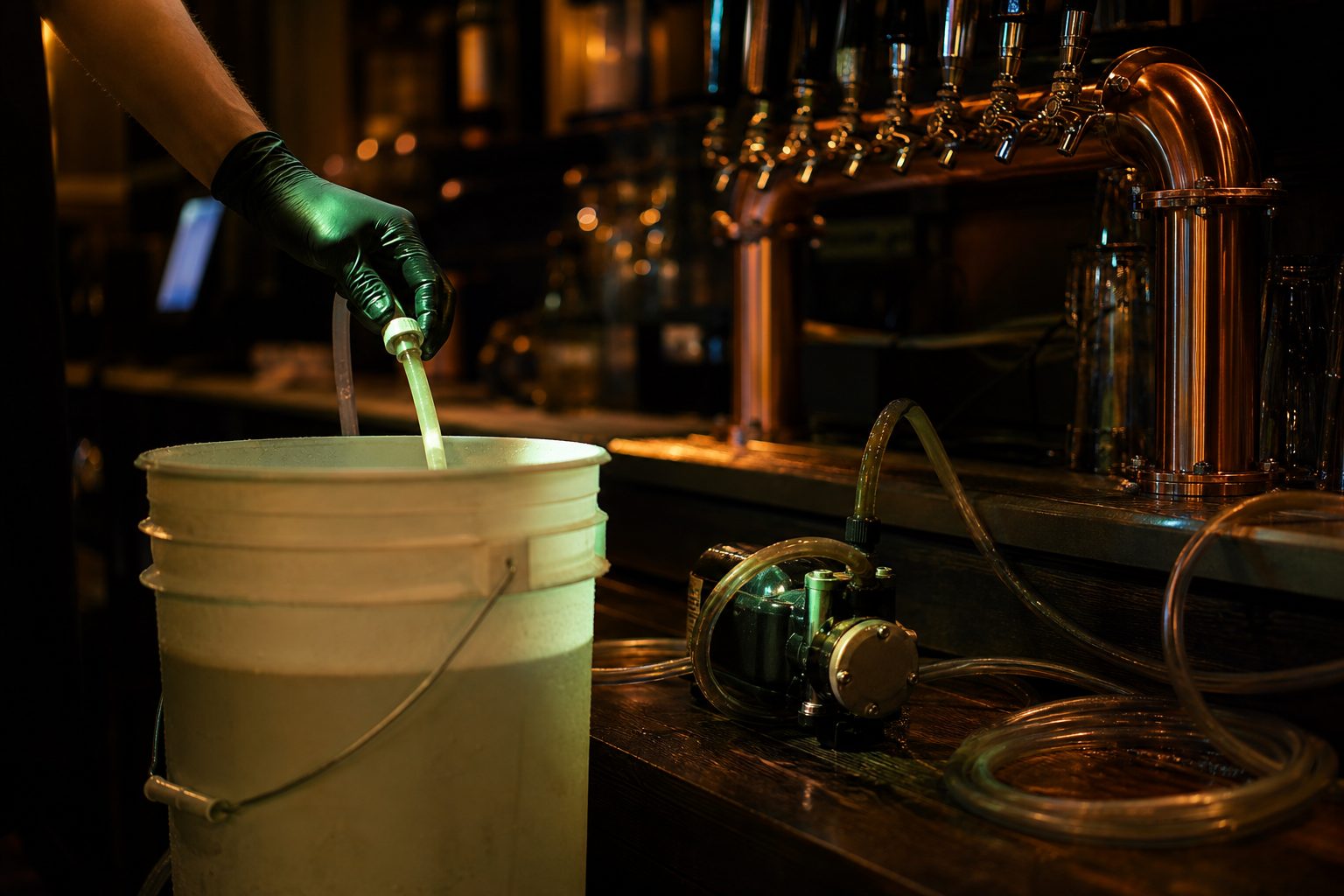
Mix the caustic cleaner according to the manufacturer's instructions, usually with warm water to speed up the chemical action. Never guess the mix ratio; too strong wastes money and risks damaging lines, too weak and the biofilm survives. Pump or push the solution through each draft line, making sure it stays in contact for at least 15 minutes. Some shops let the solution sit (static soak), others recirculate it with a pump. Scrub faucets and couplers separately.
Rinsing and Returning to Service
Once the contact time is up, flush each line with clean, cold water. Rinse until you are confident all cleaner is gone, testing pH with litmus paper is a good habit. Reconnect couplers, run a short pour of beer through each line, and taste to confirm there are no off flavors or chemical traces. This is the moment to check for leaks or pressure drops.
A two week caustic cycle is enough for most taprooms, but it only works if you stick to the schedule. Miss a round, and biofilm can get ahead of you, setting the stage for bigger problems down the road.
When Acid Cleaning Belongs in the Rotation
Caustic cleaning attacks organic deposits like yeast and sugars, but it does not dissolve the mineral scale that forms beer stone. That's where acid cleaning comes in. Every few months, or when you notice rough interiors on the lines, a food-safe acid cleaner should run through the system. This step breaks down calcium oxalate and other mineral buildup that can survive even the best caustic cycles.
The acid cycle follows the same routine: blow out the lines, mix the acid solution according to the label, circulate or soak, then rinse thoroughly. Acid cleaning is less frequent, often quarterly, but some breweries with hard water or high throughput might go to a six week interval. If you see white flakes or stubborn scale in the lines, step up the acid treatments until buildup is under control.
Skipping acid cleaning lets beer stone accumulate, which roughens the inside of hoses and makes them harder to clean. Over time, this can trap more biofilm and give off metallic or sour flavors that regular caustic alone cannot fix.
Keep reading: Six Draft System Mistakes That Turn Good Beer Into Foam
Taking Faucets, Couplers and FOBs Apart
Draft lines are only part of the system. Faucets, couplers, and foam-on-beer (FOB) devices all need routine attention. These parts see every ounce of beer and can hide gunk in tiny crevices. Even a perfect line cleaning can be defeated by a dirty faucet or neglected coupler.
Faucet Teardowns
Every cleaning cycle, remove each faucet from the tower. Disassemble the faucet body, pulling out washers, springs, and shafts. Soak all parts in caustic cleaner and scrub with a nylon brush. Inspect for stubborn scale or worn gaskets. Reassemble and sanitize before reconnecting. This step prevents old beer film from seeding the just-cleaned lines with new bacteria.
Couplers and FOB Maintenance
Keg couplers should be disassembled at least once a month. Remove probes, check valves, and O-rings, then soak and scrub. FOBs, if you have them, also come apart for soaking and brushing. Make sure float balls are free-moving and seals are not sticky. A quick wipe is not enough; a full teardown keeps off flavors and service problems at bay.
Set a schedule for deeper cleanings, weekly for high volume, every two weeks for most shops. Skipping these parts leads to drips, stuck valves, and poor pours.
Recirculation Pumps Versus Static Soak Methods
The way you move cleaning chemicals through the lines matters almost as much as the chemicals themselves. Taprooms with a dozen or fewer lines often use static soak. This method fills the lines with cleaner, lets it sit, and then rinses. It is simple and requires little equipment, but it works best if you physically scrub couplers and faucets at the same time.
Recirculation pumps, on the other hand, push cleaning solution through the entire system, returning it to a reservoir to repeat the cycle. This constant movement scrubs the inside of the lines far more effectively than a soak. Recirculation is standard for longer draft runs, high-volume bars, or when lines branch out across rooms. Even for short systems, it can cut labor time and lead to better results, especially with stubborn buildup.
The trade-off is cost and complexity. Pumps need to be cleaned and maintained themselves. They are not always justified for a four-tap tower in a small shop, but for systems with ten or more lines, the time savings and cleaning power usually pay back the investment.
See how TapListLive handles this for craft brewing
Chemical Handling, PPE and Verifying the Rinse
Draft line cleaning chemicals are strong enough to do real harm if mishandled. Always wear splash goggles, chemical-resistant gloves, and long sleeves when mixing or pouring caustic or acid solutions. Make sure the cleaning area is well-ventilated, and never mix chemicals together, especially acid and caustic, which can create dangerous reactions.
Mixing and Diluting Safely
Add chemical to water, never the other way around. Use a dedicated measuring cup and always check the label for the right dilution. Store concentrated cleaners away from food and out of reach of untrained staff. Replace containers that leak or have damaged labels.
Rinsing and Residue Checks
After every cleaning, thorough rinsing is non-negotiable. Run at least twice the line's volume of cold, clean water through each line. Test the rinse water with pH strips to confirm it is neutral before putting the system back into service. If you taste chemical residue or see foaming in the first pours, rinse again. Taking shortcuts here risks flavor, foam, and customer safety.
Building a Cleaning Log Your Inspector and Your Brewers Both Trust
A cleaning log is more than a checklist, it is protection for your license and your reputation. Health inspectors expect to see a record of draft system cleaning, including dates, chemicals used, and who performed the work. Brewers and quality managers want details, especially if they troubleshoot off flavors or foam problems.
What to Record
Each entry should include the date, time, chemicals (with concentration), method (soak or recirculation), and which lines were cleaned. Note who did the work and any problems found, such as visible beer stone, leaks, or off odors. When you do an acid cycle or a full teardown, mark it clearly. If you outsource cleaning, keep the technician's job sheet with your own log.
Digital Versus Paper Logs
Paper logs work for small shops, but they get lost or go stale. Digital logs are easier to share with inspectors, brewers, or remote owners. They also make it simple to set reminders and track patterns over time. Some taproom management tools now let you link cleaning records to your live tap list, so staff always know the last service date.
A reliable record demonstrates your commitment to beer quality and public health. If a customer ever reports an off pint, a well-kept log can help pinpoint the cause and satisfy regulators.
Managing a two week draft line cleaning cycle takes discipline, teamwork, and clear records. It helps to use the digital tools already linked to your taproom's live menu and on-screen tap lists. That way, cleaning details stay connected to what you are pouring, and both staff and customers see the benefit in every glass.